Hand-Drawn Halloween Patterns: Why Authentic, Artistic Designs Still Matter in Digital Design
When you think of Halloween visuals—pumpkins, bats, ghosts, black cats, and cobwebs—you likely imagine bold, stylized graphics. But behind many of today’s most engaging seasonal designs lies something refreshingly human: the hand-drawn pattern. A hand-drawn pattern on the theme of Halloween isn’t just decorative—it’s a bridge between tradition and creativity, craftsmanship and digital utility. Whether you're designing invitations, crafting social media assets, or producing print-on-demand merchandise, these patterns bring warmth, personality, and authenticity that algorithm-generated or stock-heavy alternatives often lack.
What Exactly Is a Hand-Drawn Halloween Pattern?
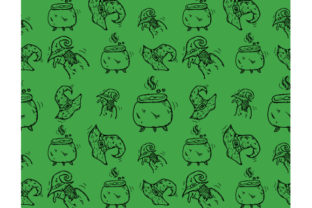
A hand-drawn Halloween pattern is a repeatable, cohesive design motif created manually—using pen, ink, pencil, or digital drawing tablets—and then arranged into a seamless tile. Unlike vector clipart or AI-generated motifs, it retains visible line variation, subtle imperfections, and expressive energy. The files you’ll often encounter include:
- 1 vector EPS file: Scalable without quality loss—ideal for logos, large-format prints (like banners or signage), or editing in Adobe Illustrator or Affinity Designer.
- 1 high-resolution JPG file: Ready-to-use raster format perfect for web backgrounds, social posts, email headers, or quick mockups in Canva or Photoshop.
Together, these formats ensure flexibility across both professional design workflows and beginner-friendly tools—making them practical for educators, small business owners, crafters, and marketing teams alike.
Why Hand-Drawn Beats “Perfect” Every Time
It’s easy to assume that crisp, symmetrical, digitally rendered graphics are “better.” But research in visual psychology shows that people subconsciously associate slight irregularities—like uneven line weight or organic spacing—with honesty, care, and humanity. In a season defined by storytelling and atmosphere, a hand-drawn pattern evokes nostalgia and intimacy. Think of vintage Halloween postcards from the 1930s or children’s storybook illustrations—those tactile qualities still resonate deeply.
This isn’t about rejecting technology. It’s about enhancing it. A hand-drawn pattern becomes more powerful when paired with modern tools: overlay it on animated web elements, layer it under typography in a newsletter, or use it as a subtle texture beneath product photography. Its versatility lies in its groundedness—not in rigid uniformity.
Real-World Uses Across Industries
Here’s where hand-drawn Halloween patterns truly shine beyond seasonal decor:
- Educators & Homeschoolers: Use the JPG as a printable background for worksheets, flashcards, or classroom posters. Students can trace elements to build fine motor skills—or use the EPS to create custom cut-outs with Cricut or Silhouette machines.
- Small Businesses & Cafés: Apply the pattern to menu boards, takeout bags, or limited-edition packaging. A locally owned bakery might wrap pumpkin spice cookies in paper featuring a hand-drawn bat-and-candy corn motif—communicating charm and community over mass production.
- Content Creators & Social Media Managers: Layer the JPG over Instagram Stories or TikTok thumbnails for instant thematic cohesion. Because it’s not overly busy, it supports legibility while reinforcing brand voice—playful but intentional.
- Print-on-Demand Sellers: Import the EPS into platforms like Printful or Gelato to generate scarves, mugs, tote bags, or phone cases. Customers increasingly seek items with “artisanal” cues—even when digitally produced.
Debunking Common Misconceptions
Let’s clear up a few assumptions that hold people back from using hand-drawn patterns effectively:
- “Hand-drawn means low-res or unprofessional.” Not true. High-fidelity scanning, vector tracing, and thoughtful color separation produce polished, production-ready assets—like the EPS and JPG included with this pattern set.
- “Only illustrators can work with hand-drawn files.” False. Modern design apps (Canva, Figma, even PowerPoint) support JPG uploads with transparency options. The EPS file is editable by anyone with free tools like Inkscape—or simply used as-is for scaling.
- “It’s only for Halloween parties or kids’ crafts.” Too narrow. These patterns function beautifully in editorial design (think magazine spreads on autumn culture), UX interfaces (subtle loading animations), or even architectural visualization (textured wall treatments for themed retail spaces).
How to Integrate This Pattern Thoughtfully
Getting the most from your hand-drawn pattern on the theme of Halloween starts with intention—not decoration. Ask yourself:
- What feeling do I want to evoke? Whimsy? Mystery? Nostalgia? The sketchy linework of a ghost or the delicate cross-hatching on a witch’s hat guides emotional tone.
- Where will it be seen? On a tiny mobile screen? A 48" storefront window? Adjust scale and contrast accordingly—the JPG should be saved at 300 DPI for print, 72 DPI for web.
- Does it complement—or compete—with other elements? Use it as a background layer, not the focal point, unless intentionally spotlighting craftsmanship (e.g., an “artist spotlight” feature).
Pro tip: Try recoloring the EPS in your design software. Swap orange-and-black for deep plum and gold for an elegant, adult-oriented twist—or mint and charcoal for a modern, gender-neutral take. The hand-drawn foundation remains intact, but the mood shifts entirely.
The Bigger Picture: Why Crafted Design Matters Now More Than Ever
In an age of AI image generators and infinite stock libraries, hand-drawn patterns represent something quietly revolutionary: human attention. Each curve, each pause in the line, reflects time, judgment, and care. That resonance translates directly into trust—especially with audiences fatigued by generic visuals.
For educators, it models creative process over polished output. For entrepreneurs, it differentiates brands in saturated markets. For designers, it reconnects technical skill with expressive intent. And for consumers? It signals authenticity—a value that consistently ranks among the top drivers of purchase decisions, according to 2023–2024 consumer behavior studies from Edelman and Sprout Social.
Halloween itself is rooted in transformation and storytelling—two acts inherently tied to handmade expression. From ancient Samhain rituals marked with natural pigments to today’s DIY costume contests, the hand-made has always been central to the holiday’s spirit. Using a hand-drawn pattern honors that lineage—not as a gimmick, but as a meaningful design choice.
Getting Started: Simple Next Steps
You don’t need advanced software or illustration training to begin. Here’s how to dive in today:
- Download both files and open the JPG in any photo editor or presentation tool.
- Create a new document sized for your goal (e.g., 1080×1080 px for Instagram).
- Set the JPG as a background layer, lowering opacity to 10–20% for subtlety—or keep it at full strength for bold impact.
- Add text or icons on top, choosing fonts with similar warmth (e.g., slightly rounded sans-serifs or friendly serifs).
- If using the EPS, import into Illustrator or Inkscape, ungroup elements, and recolor individual shapes using the Swatches panel.
Experiment. Print a test swatch. Share a draft with a colleague. Notice how the pattern changes the perceived tone of your message—not because it’s “Halloween-y,” but because it feels made.
Ultimately, a hand-drawn pattern on the theme of Halloween is more than seasonal flair. It’s a reminder that in our fastest-moving digital moments, the slow, considered mark of the human hand still holds unmatched power—to engage, to connect, and to make meaning. Whether you’re sending a class newsletter, launching a boutique collection, or simply brightening someone’s feed, that intention shows. And that, in any season, is worth celebrating.