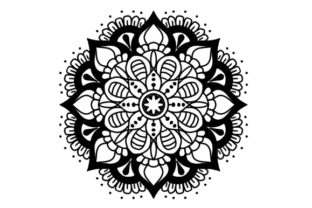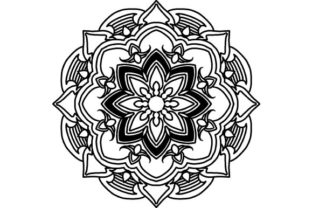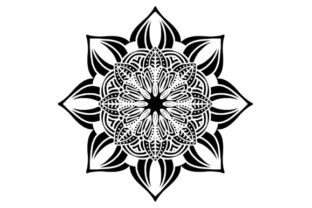
Mandala Vector Art Pattern 553: A Versatile, Ready-to-Use Design Asset for Real Creative Work
Mandala Vector Art Pattern 553 isn’t just another decorative graphic—it’s a precision-crafted, scalable design element built for immediate integration into real projects. Unlike raster-based mandalas that pixelate when enlarged, this pattern arrives in AI (Adobe Illustrator), EPS (cross-compatible vector format), and high-res JPG files—giving you flexibility whether you’re prepping for print, web, embroidery, or digital presentation.
Where This Pattern Fits Naturally—Not Just as “Decoration”
Think of Mandala Vector Art Pattern 553 as a quiet multitasker: it doesn’t shout for attention, but it elevates context with intention. Here’s where people actually reach for it—and why it sticks:
- Print-on-Demand Sellers: Artists running Etsy or Redbubble shops use Mandala Vector Art Pattern 553 to build cohesive collections—think matching notebook covers, yoga mat designs, and wall art sets. Because it’s vector-based, they resize it effortlessly across product mockups without reworking alignment or detail.
- Therapy & Wellness Practitioners: Counselors, yoga instructors, and mindfulness coaches embed this pattern into guided journal pages, printable breathwork cards, or workshop handouts. Its balanced symmetry supports focus and calm—not as background noise, but as a subtle visual anchor during reflection.
- Small-Business Branding: A boutique skincare brand used Mandala Vector Art Pattern 553 as the repeating motif on their product labels and packaging liner. It added artisanal warmth without competing with typography—and because it’s delivered in AI and EPS, their designer adjusted stroke weight and color mode in under five minutes to match their Pantone palette.
- Teachers & Educators: Middle school art teachers project the JPG version for symmetry lessons; then switch to the AI file to demonstrate vector nodes and path editing in beginner Illustrator labs. One educator told us it cut down her prep time by half—no more tracing or redrawing from scratch.
Who Benefits Most—and How Their Needs Shape Use
The value of Mandala Vector Art Pattern 553 shifts depending on who’s holding the file—and what they need to get done *today*:
- Designers with tight deadlines appreciate that it’s production-ready: no clipping masks to fix, no inconsistent anchor points, and no hidden raster layers. They drop it into layouts and move on—especially useful when updating seasonal social media templates or client pitch decks.
- Hobbyists learning design software find the AI file especially helpful. They can ungroup elements, isolate petals or concentric rings, and experiment with recoloring or layering—without worrying about losing fidelity. It becomes both asset and teaching tool.
- Print professionals rely on the EPS version for compatibility with older RIP (raster image processor) systems used in large-format printing or textile screen separation. No surprises at the press—just clean, crisp output at any scale.
- Digital creators building assets for resale use the JPG as a quick preview thumbnail or for embedding in Canva templates. Since it’s high-resolution (300 DPI), it holds up even in printed catalogs or PDF portfolios shared with clients.
Practical Considerations Before You Apply It
Even great tools work best when matched thoughtfully to the job. Here’s what users commonly notice—and plan around—before using Mandala Vector Art Pattern 553:
- Color adaptability matters: The base file is delivered in grayscale vector paths, so it’s infinitely recolorable—but if you’re applying it over busy photography or textured backgrounds, test contrast first. A soft lavender or deep charcoal often reads more clearly than pure black on complex imagery.
- Scale changes how it functions: At thumbnail size (e.g., 80×80 px), fine inner linework may blur or disappear. For UI icons or favicons, simplify or trace the outermost ring only. At mural scale (10+ feet wide), the EPS or AI file shines—you’ll see every deliberate curve and spacing decision hold up.
- Repetition needs rhythm, not rigidity: When tiling Mandala Vector Art Pattern 553 for wallpaper or fabric, leave breathing room between repeats—or rotate alternate tiles 30°. Users report that strict grid repetition can feel static; a slight variation keeps the eye moving naturally.
- Copyright clarity is built-in: This isn’t clipart with murky licensing. You receive full commercial rights to use Mandala Vector Art Pattern 553 across physical products, digital platforms, and client work—no attribution required. That peace of mind saves hours of legal review, especially for agencies or freelancers managing multiple brands.
Strengths That Show Up in Daily Use
What makes Mandala Vector Art Pattern 553 stand out isn’t complexity—it’s thoughtful execution:
- No hidden surprises: All strokes are outlined, text is converted, and layers are named logically (e.g., “OuterRing,” “CenterFloral,” “Guides_Off”). You won’t waste time hunting for stray points or embedded fonts.
- Optimized for both precision and play: The vector structure allows surgical edits—like adjusting one petal’s curvature—but also invites intuitive experimentation. Try blending modes in Photoshop with the JPG, or use the AI file to generate generative variations via Illustrator’s Transform effect.
- Time-saver for non-designers: A nonprofit event planner used the JPG version to create a serene Zoom background for their virtual meditation series. She resized it in Preview (Mac) and uploaded it in under two minutes—no design app needed.
A Few Gentle Limitations to Keep in Mind
It’s honest to say Mandala Vector Art Pattern 553 isn’t meant to be everything to everyone:
- It’s a single, self-contained motif—not a toolkit of 50 variations. If you need dozens of color-swapped versions or alternate line weights, plan to adjust them yourself (which is fast in vector, but still a step).
- It doesn’t include font pairings or layout suggestions—so while it works beautifully in a brochure, you’ll choose your own typeface and hierarchy. That’s intentional: it stays neutral so your voice leads.
- It’s symmetrical by design, which is calming—but if your project calls for asymmetry, organic flow, or deconstructed geometry, this pattern won’t pivot in that direction. That’s okay. Knowing its natural center helps you choose wisely.
Real Moments Where It Made the Difference
A ceramicist used Mandala Vector Art Pattern 553 to laser-etch the underside of her dinner plates—not as decoration, but as a subtle signature mark. Customers noticed it only on close inspection, turning functional objects into quietly meaningful keepsakes.
A university wellness center printed it on biodegradable stress-relief cards handed out during finals week. Students traced the lines with their fingers during study breaks—no instructions needed. The vector precision ensured every card had identical spacing, making tactile engagement consistent and reliable.
None of these uses were in a spec sheet. They emerged from people solving small, human problems—and finding Mandala Vector Art Pattern 553 already fit, without forcing.