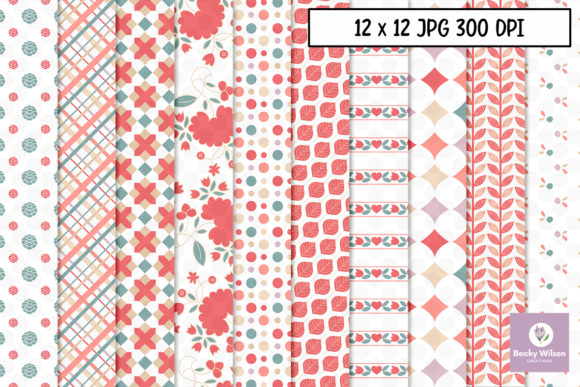
Simple Pleasures Paper Pack: Thoughtful Design, Real-World Versatility
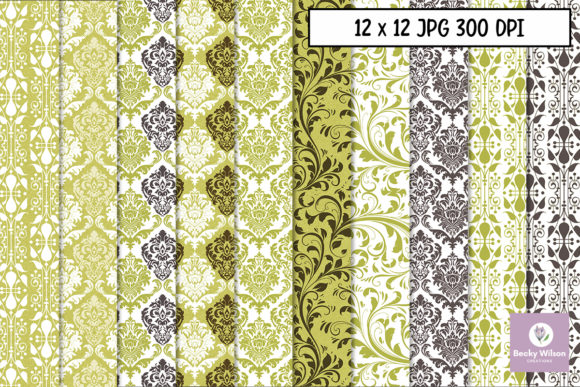
If you've ever opened a digital paper pack expecting rich texture and crisp detail—only to find blurry edges, inconsistent tones, or awkward scaling—you know how much hinges on the right starting point. The Simple Pleasures Paper Pack is designed to eliminate those frustrations: 10 high-resolution JPG files, each precisely 12 inches by 12 inches at 300 dpi, ready for both screen and print use. It’s not just about aesthetics—it’s about reliability across real creative workflows.
Why This Pack Fits So Many Roles—Without Compromise
This isn’t generic clipart or low-res filler. Each paper in the Simple Pleasures Paper Pack is crafted with intentional color harmony, subtle texture, and balanced contrast—so it performs well whether you’re printing wedding invitations on premium cardstock or layering elements into a digital scrapbook layout. Educators use these papers for classroom posters that hold up under photocopier stress; small business owners adapt them as branded stationery or packaging backdrops; freelancers integrate them into client presentations without worrying about pixelation on large displays.
Because they’re delivered as JPGs—not layered PSDs or vector files—they load quickly, open in nearly any editing program (including free tools like Canva or Photopea), and require no special software licenses. That simplicity matters when you're juggling deadlines, teaching students with limited tech access, or prototyping a product line on a tight budget.
A Common Mistake: Assuming All “12x12” Papers Are Print-Ready
Not all digital papers labeled “12x12” are created equal. Some are saved at 72 dpi—fine for web thumbnails but disastrous when scaled to full size for printing. Others are upscaled artificially, introducing softness or halos around fine details. When you try to use those for handmade cards or gift wrap, colors bleed, patterns blur, and textures vanish under ink.
The Simple Pleasures Paper Pack avoids this by delivering true 300 dpi resolution at native 12×12 inch dimensions. That means every inch contains enough data for sharp reproduction—even on matte or textured paper stocks. If you’ve ever printed a design only to discover faint banding or muddy gradients, double-check your source file’s DPI before assuming the issue lies with your printer or paper choice.
Overlooking File Format Implications
JPG may seem limiting if you’re used to working with transparent PNGs or editable PSD layers—but it has distinct advantages here. JPGs maintain consistent color fidelity across devices, compress efficiently without visible artifacts at this resolution, and avoid transparency-related surprises (like unexpected white backgrounds appearing behind floral motifs during print prep). For projects like wrapping paper, journal cards, or book covers—where solid, seamless coverage matters more than layering flexibility—JPG is often the smarter, more predictable choice.
That said, don’t assume JPG means inflexibility. You can easily convert individual papers to PNG in seconds using free tools if you need transparency for overlays. But start with the clean, reliable JPG—then adapt, rather than trying to fix compression damage or resolution gaps after the fact.
Misjudging Scale Across Applications
One overlooked detail: how a paper behaves at different physical sizes. A delicate dot pattern that reads beautifully at 12×12 inches can become visually lost on a 4×6 postcard—or overwhelm a 2×3 journal card. Before committing to a full project, test a single paper at your intended output size. Open it in your editor, resize it to match your final dimensions (e.g., 4.25×5.5 inches for folded invitations), and zoom to 100% view. Does the texture still feel intentional? Is the color balance preserved? Does the repeat align cleanly if you tile it?
With the Simple Pleasures Paper Pack, each design was tested across common craft and print formats—from A4 reports to 8.5×11 inch flyers—so you’re less likely to hit scale-related surprises. Still, always do your own quick check. It takes 30 seconds and saves hours of rework.
Skipping the “Print Test” Step
Even perfect files can behave differently depending on your printer model, ink type, and paper stock. Glossy photo paper enhances contrast; uncoated linen adds tactile depth but softens fine lines. Don’t skip a small-scale test print—especially for time-sensitive projects like wedding stationery or school fair displays. Print one corner of a paper at actual size on your target media, then hold it next to your screen. Look for shifts in warmth (cool vs. warm whites), saturation loss, or subtle moiré in repeating patterns.
If you notice discrepancies, adjust your printer’s color profile—not the original file. The Simple Pleasures Paper Pack uses sRGB color space, which ensures broad compatibility. But your device’s calibration makes the final difference.
What to Verify Before Downloading or Purchasing
- Resolution confirmation: Ensure the listing explicitly states “300 dpi” and “12×12 inches”—not just “12×12” or “high-res.”
- File format clarity: Confirm it’s JPG (not JPEG, JPGX, or unnamed extensions) and that no additional software is required to open or edit.
- Licensing scope: Check whether personal, commercial, and small-business use are included—especially if you plan to resell finished goods (e.g., printable planners or greeting cards).
- Color accuracy notes: Reputable packs often include a note about sRGB compliance or recommend calibrating your monitor before critical color work.
Better Choices Start With Intentional Use
You don’t need ten papers for every project—but having ten thoughtfully made options means you won’t reach for the same overused background three times this month. Try pairing one textured neutral with a soft botanical print for a cohesive invitation suite. Use a muted tone-on-tone design as subtle backing for student worksheets. Layer a delicate lace-patterned paper beneath bold typography for social media graphics that stand out without shouting.
The strength of the Simple Pleasures Paper Pack isn’t in quantity alone—it’s in consistency, intention, and quiet versatility. It supports your process instead of complicating it. Whether you’re sketching lesson plans, prepping client deliverables, or making something meaningful for a loved one, these papers meet you where you are—no workarounds, no compromises, no second-guessing.
When your tools behave predictably, your creativity flows freely. And that simple pleasure? It’s worth building on.