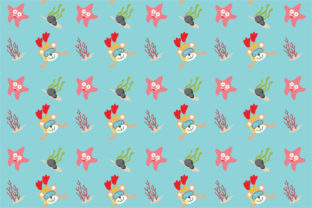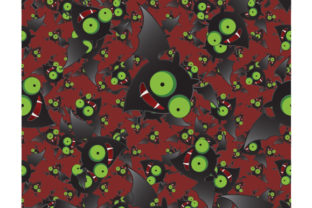
Halloween Holiday Seamless Pattern
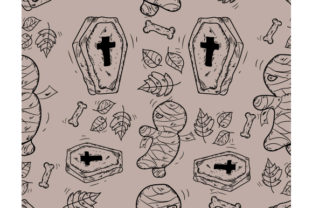
A Halloween Holiday Seamless Pattern is a repeatable, tileable design—crafted with hand-drawn elements—that forms a cohesive visual backdrop without visible seams or breaks. Unlike static illustrations or one-off graphics, this pattern is built to scale infinitely across surfaces: digital screens, print layouts, packaging, social media templates, or physical merchandise. The included files—a 10-vector EPS and a high-resolution JPG—provide flexibility for both editing and immediate use. This isn’t just decoration; it’s infrastructure for visual consistency during seasonal execution.
Where It Fits in Your Creative or Business Workflow
The Halloween Holiday Seamless Pattern enters your process at the asset preparation stage—not after design decisions are locked in, but before they’re even made. For marketers launching October campaigns, it serves as a foundational layer that informs color palettes, typography hierarchy, and layout rhythm. For educators building themed lesson materials, it becomes part of a reusable template system—reducing repetitive formatting and keeping student-facing assets visually aligned with learning goals. Freelancers preparing client deliverables often embed it early in brand board mockups, allowing stakeholders to assess tone and cohesion before committing to custom illustration or photo shoots.
It also functions as a quality control checkpoint. If your vector EPS doesn’t tile cleanly when scaled across an A3 poster or a 4K banner, something’s off in the alignment or spacing of the hand-drawn motifs—spiders, pumpkins, bats, or whimsical ghosts. That mismatch reveals inconsistencies before final export, saving time in revision cycles.
Integration With Other Tools and Assets
This pattern works best when treated as a modular component—not a standalone hero image. In Adobe Creative Cloud workflows, the EPS file drops directly into Illustrator artboards or Photoshop smart objects, retaining full editability of paths and layers. Designers using Figma can place the JPG as a fill within frames or convert it to SVG via vector tracing tools for responsive scaling. For Canva users, the JPG serves as a background upload while maintaining readability when overlaid with text boxes or branded icons.
It pairs naturally with other seasonal assets: a coordinated font family (like a playful serif for headlines and a clean sans-serif for body copy), a limited palette drawn from the pattern’s dominant hues (burnt orange, deep purple, charcoal black), and icon sets that echo its hand-drawn line weight and texture. When combined with editable photo mockups—say, a mug or notebook template—the pattern becomes part of a production-ready kit, not just a decorative flourish.
For small business owners printing stickers, tote bags, or event signage, compatibility matters. The EPS ensures crisp output at any size, while the JPG offers quick previewing in email proofs or web-based proofing tools like ProofHub or Dropbox Paper. Neither file requires proprietary software to verify basic usability—making collaboration smoother across teams with mixed tool access.
Practical Implementation Across Real Projects
Before launch: Use the pattern as a visual anchor during mood board development. Import the JPG into Milanote or Miro alongside competitor examples, customer quotes, and content calendars. Its presence helps ground abstract strategy in tangible aesthetic direction—especially useful when aligning cross-functional stakeholders who respond more readily to visuals than bullet points.
During creation: Apply the EPS as a background layer in Illustrator when designing social posts. Set it to Multiply or Overlay blend mode to let text and icons stand out without losing texture. Adjust opacity slightly (85–92%) if you need to preserve contrast for accessibility compliance. For printed materials like flyers or invitation suites, embed the vector directly into InDesign master pages—ensuring every spread inherits the same underlying rhythm.
After delivery: Archive both files with clear naming conventions: Halloween_Holiday_Seamless_Pattern_EPS_v1.ai and Halloween_Holiday_Seamless_Pattern_JPG_300dpi.jpg. Include a brief README.txt noting recommended use cases, minimum resolution thresholds, and compatible software versions. This supports long-term reusability—critical for annual campaigns where consistency builds recognition over time.
Factors That Impact Usability and Long-Term Value
Preparation starts with verifying tile boundaries. Open the EPS in Illustrator, enable rulers and smart guides, then duplicate and offset the artboard by exactly its width and height. If edges align without gaps or overlaps, the pattern is truly seamless. If not, minor nudges to motif placement may be needed—something only the vector format allows.
Organization matters when managing seasonal assets. Store this pattern in a dedicated “Halloween Assets” folder nested under your broader “Seasonal Templates” directory. Tag it in cloud storage with metadata like “vector,” “seamless,” “hand-drawn,” and “2024-ready”—helping future-you surface it quickly amid dozens of similar files.
Efficiency increases when you build presets around it. In Photoshop, save a Layer Style preset that applies subtle noise or grain to match the hand-drawn texture. In Illustrator, create Graphic Styles that replicate common shadow or stroke treatments used with the motifs. These micro-optimizations compound across dozens of assets.
Consistency is reinforced when the pattern appears across touchpoints—not just banners and emails, but also slide decks, worksheet headers, or even internal Slack channel banners. That repetition signals intentionality, not randomness. It tells your audience—or your team—that this season’s messaging has been thought through, not slapped together.
Observations From Real-World Use
Teams that treat the Halloween Holiday Seamless Pattern as a system—not just a background—report fewer last-minute design changes. Why? Because decisions about visual tone are baked in early, reducing ambiguity later. One educator shared that using the pattern across Google Slides, printable PDFs, and classroom posters cut her October prep time by nearly 40%, since she no longer had to manually adjust spacing or color balance per file.
Freelancers note that clients rarely request revisions to the pattern itself—once approved, it stays stable across deliverables. That reliability lets them focus energy on higher-value work: refining messaging, optimizing CTAs, or personalizing content—not tweaking background alignment.
Small business owners using it for Etsy listings or Shopify banners observe improved click-through rates when the pattern appears consistently across product images and homepage banners. The visual continuity lowers cognitive load for shoppers scanning multiple items—it feels intentional, trustworthy, and seasonally grounded.
Making It Work for Your Routine
You don’t need to overhaul your workflow to integrate the Halloween Holiday Seamless Pattern. Start small: replace one generic background in your next newsletter template. Then extend it to two related assets—say, an Instagram carousel slide and its matching email header. Notice how much faster the second asset goes together. That’s the signal: this isn’t overhead. It’s leverage.
If you’re planning ahead for next year, add it to your seasonal asset calendar—schedule time in late July to review, update if needed, and re-archive. Treat it like a font license or stock photo subscription: a quiet, behind-the-scenes enabler that pays dividends in speed, coherence, and professional polish.
Its value isn’t in novelty—it’s in reliability. In a landscape where trends shift fast and attention spans shrink, having one consistent, hand-crafted visual thread across your Halloween efforts gives your work clarity, warmth, and staying power.