Magnolia Seamless Pattern: A Strategic Design Asset for Purpose-Driven Creators
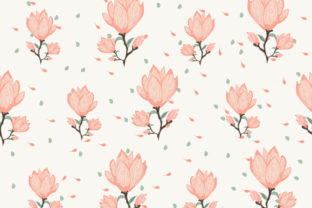
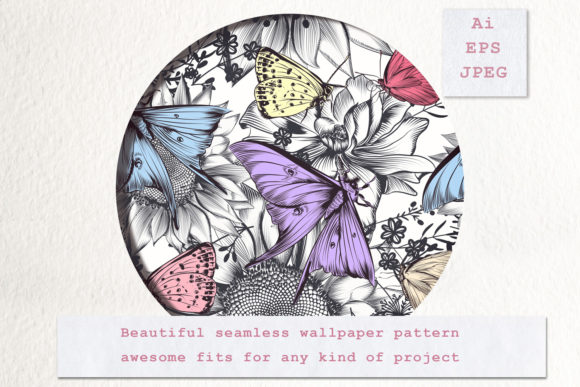
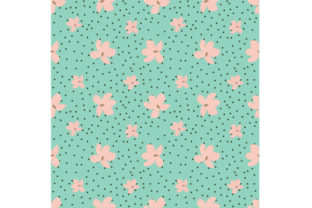
A Magnolia Seamless Pattern isn’t just decorative—it’s a functional design decision with measurable impact on communication clarity, brand cohesion, and user engagement. This floral small cute magnolia seamless pattern—delivered in both vector EPS and high-resolution JPG formats—offers more than visual charm. It offers consistency, scalability, and contextual resonance when applied with intention.
Why “Seamless” Matters Beyond Aesthetics
Seamlessness isn’t about invisibility—it’s about continuity. When a pattern repeats without visible breaks or alignment shifts, it supports cognitive ease. Viewers don’t pause to decode edges or seams; they absorb tone, rhythm, and mood. That’s especially valuable in environments where attention is fragmented: digital dashboards, presentation decks, packaging backgrounds, or educator handouts. A well-chosen Magnolia Seamless Pattern subtly reinforces calm, natural sophistication—qualities that align with wellness brands, academic institutions, boutique retailers, and mindful service providers.
The vector EPS file ensures pixel-perfect reproduction at any scale—from a business card watermark to a 10-foot trade show backdrop. The JPG provides immediate usability for web banners, social media templates, or email headers where vector support is limited. That dual-format inclusion reflects thoughtful preparation—not just asset delivery.
Strategic Use Cases: Where Intention Meets Application
Consider these grounded, real-world applications—not as isolated ideas, but as outcomes of deliberate planning:
- Brand Extension, Not Decoration: A freelance graphic designer uses the Magnolia Seamless Pattern as a subtle background layer behind client testimonials on a portfolio site. It doesn’t compete with content—it adds warmth and quiet authority, reinforcing the designer’s positioning as detail-oriented and human-centered.
- Internal Communication Clarity: An HR manager incorporates the pattern into onboarding slide templates. Its gentle repetition creates visual rhythm across modules, reducing cognitive load during information-heavy sessions—without sacrificing professionalism.
- Educational Resource Design: A biology educator layers the pattern beneath illustrated plant anatomy diagrams in printable worksheets. The floral motif primes context before students engage with content—supporting memory encoding through associative design.
- Product Packaging Consistency: A small-batch skincare brand applies the pattern as a foil-stamped background on matte paper labels. Because the EPS scales flawlessly, the same file works across 15ml serums and 250ml body oils—reducing production variables and reinforcing shelf presence.
Planning Before Placement: Three Decision Filters
Before inserting the Magnolia Seamless Pattern into any project, apply these filters—not as formal steps, but as quick mental checks:
- Does it serve a functional outcome? Ask: Will this improve readability? Strengthen recognition? Reduce visual noise? If the answer is only “it looks nice,” pause. Aesthetic preference alone rarely sustains long-term brand equity or user trust.
- Does it align with audience expectations? A fintech dashboard using this pattern may unintentionally signal softness over security. But a botanical tea subscription’s email header? It signals authenticity and care—values their customers actively seek.
- Is the execution technically sound? Vector files require proper embedding (not linking) in print workflows; JPGs need appropriate resolution (300 DPI for print, 72–150 DPI for web). Misapplication erodes credibility faster than no pattern at all.
Risks of Unintentional Use
Using the Magnolia Seamless Pattern without strategic framing carries quiet risks:
- Dilution of messaging: When layered over text-dense layouts or competing visuals, the pattern can reduce scannability—especially for neurodiverse users or those viewing on low-resolution devices.
- Brand misalignment: Overuse across every touchpoint—website, invoices, social posts—can flatten differentiation. Patterns gain power through restraint and contrast, not saturation.
- Operational friction: Assuming the JPG will suffice for large-format printing leads to pixelation, rework, and timeline delays. That vector EPS file exists for a reason—it’s not optional infrastructure.
How to Use It Intentionally—Not Just Automatically
Intentionality starts with context, not color palettes or layout grids. Begin by asking: What behavior or perception do I want to support here?
If the goal is trust-building, use the pattern sparingly—as a border element on proposal covers or certification badges. Its organic structure suggests care and craftsmanship, reinforcing claims of quality.
If the goal is calm navigation, apply it as a very low-opacity background (8–12%) behind form fields or dashboard cards. The repetition creates subconscious stability without drawing focus from interactive elements.
If the goal is brand recall, pair it with a single, consistent accent color—like deep forest green or warm terracotta—and use that combination across physical and digital assets. Repetition of *combination*, not just pattern, builds neural pathways.
Long-Term Value: Beyond One-Time Projects
This Magnolia Seamless Pattern holds compounding value when treated as part of an evolving visual system—not a one-off download. Document how and where you’ve used it: which opacity levels worked best in presentations versus print, which file format reduced revision rounds with your printer, how customers responded when it appeared in unboxing materials.
That documentation becomes strategic intelligence. It informs future decisions—like whether to commission a custom variant with adjusted petal density or stem weight—or whether to phase it out entirely as your brand matures into bolder visual territory.
Small businesses often overlook how pattern consistency supports operational efficiency: fewer design approvals, faster template updates, clearer briefs for contractors. When your team knows *why* the Magnolia Seamless Pattern appears in certain contexts—and what it’s meant to achieve—they make better micro-decisions without constant oversight.
When to Choose This Over Other Floral Patterns
Not all floral patterns communicate the same values. Delicate magnolias carry distinct associations: resilience (they bloom early, often through chill), simplicity (no overly fussy petals), and quiet confidence (they don’t rely on bright color to command attention). That makes this Magnolia Seamless Pattern especially effective when your work centers on:
- Mindful service delivery (therapy practices, coaching, education)
- Sustainable product development (eco-textiles, natural cosmetics, slow-fashion labels)
- Academic or research communication (where clarity and gravitas matter more than flash)
- Local, community-rooted businesses (farmers’ markets, independent bookshops, artisan studios)
In contrast, busier rose or peony patterns may better suit luxury fashion or celebratory contexts. The choice isn’t about “better” or “worse”—it’s about fidelity to purpose.
Final Strategic Note: Patterns Reflect Process
A Magnolia Seamless Pattern reveals how you think about repetition, rhythm, and reliability. Do you treat repetition as redundancy—or as reinforcement? As filler—or as foundation? The way you deploy this asset mirrors deeper habits: how you plan campaigns, structure learning materials, onboard teams, or refine customer journeys.
So don’t just place it. Position it. Test its effect on conversion rates in email headers. Track time-on-page when used in resource libraries. Compare customer feedback on packaging that features it versus minimalist alternatives. Let evidence—not instinct—guide expansion or refinement.
Because the most valuable pattern isn’t the one that looks prettiest in isolation. It’s the one that quietly, consistently, supports better decisions—yours and your audience’s.